Start with the frame
An illuminated zodiac figure takes shape through a sequence of workshop work: building the steel frame, fitting fabric, applying painted colour and details, then reviewing the completed figure and its illuminated appearance. The horse is our main example. The other photographs in this article show separate projects and are labelled as such; they illustrate particular processes or settings, not later stages of the horse.
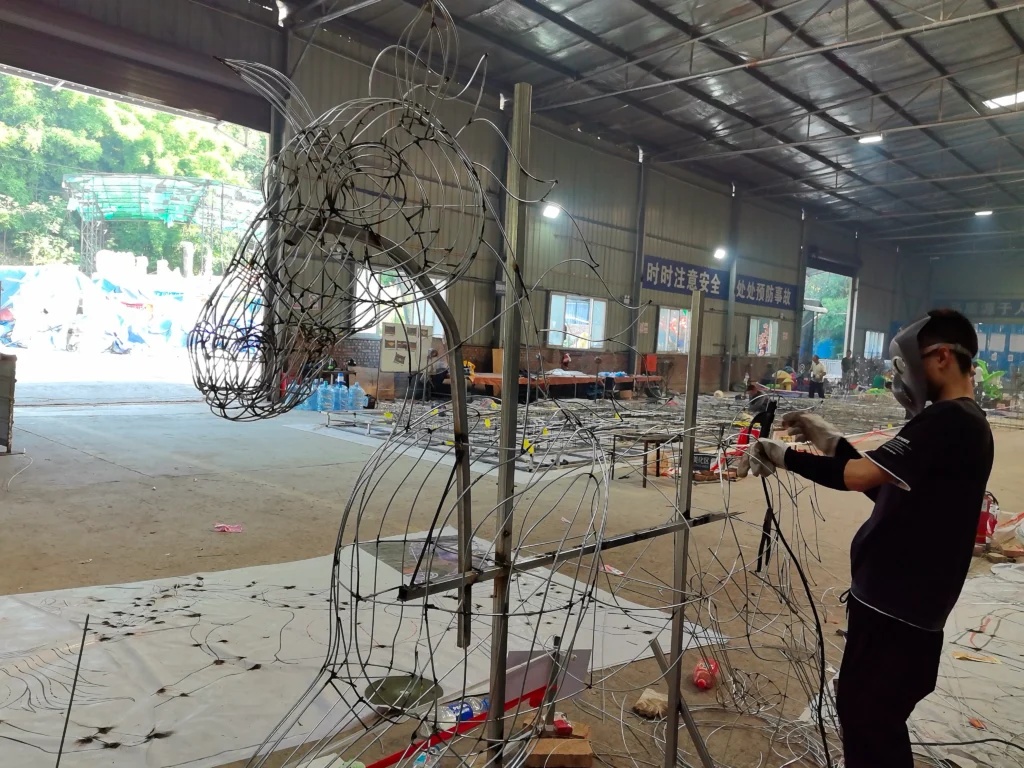
We begin with the available space and main viewing angle. The pose must remain recognisable at the intended scale, and a group needs enough separation for individual silhouettes to be seen. The base and surrounding scenery belong in that early discussion.
While the frame is exposed, the outline, connection points and transport divisions can be reviewed together. Production drawings need to translate the appearance into dimensions and joints. Lighting and maintenance access also need consideration before the surface closes around the structure.
Fit a continuous surface
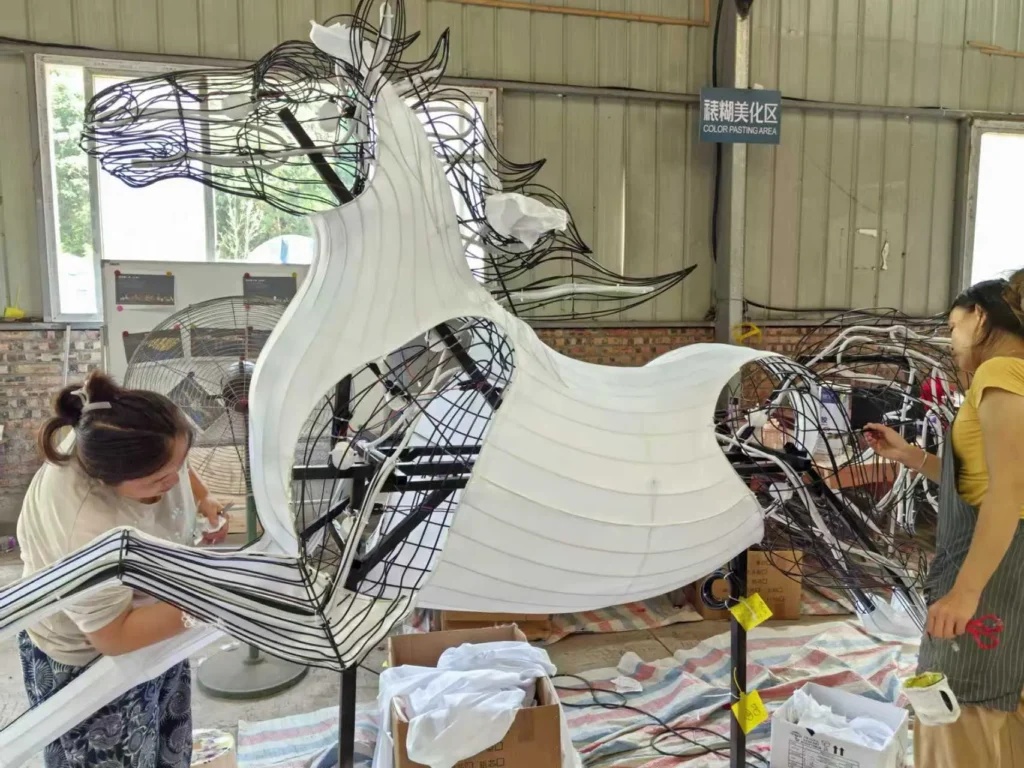
The fabric turns a network of lines into a continuous body. In the workshop photograph, the neck and torso have begun to read as a solid form while parts of the head, shoulder and hindquarters remain open. This makes the relationship between the curved framework and the finished surface particularly clear.
Covering is also a point at which the shape becomes easier to judge. The frame may describe a volume, but the fitted surface reveals how one curve meets the next. Visible seams, changes in contour and the treatment of details need attention before the final colours are applied. The mane and face carry much of the horse's expression, so they need to remain readable from the intended viewpoint.
We consider the daytime finish alongside the illuminated appearance. Colour and painted details should support the form rather than compensate for an unresolved silhouette. A visitor may encounter the same figure in afternoon light and return after dark; both views belong to the design.
Develop colour and detail
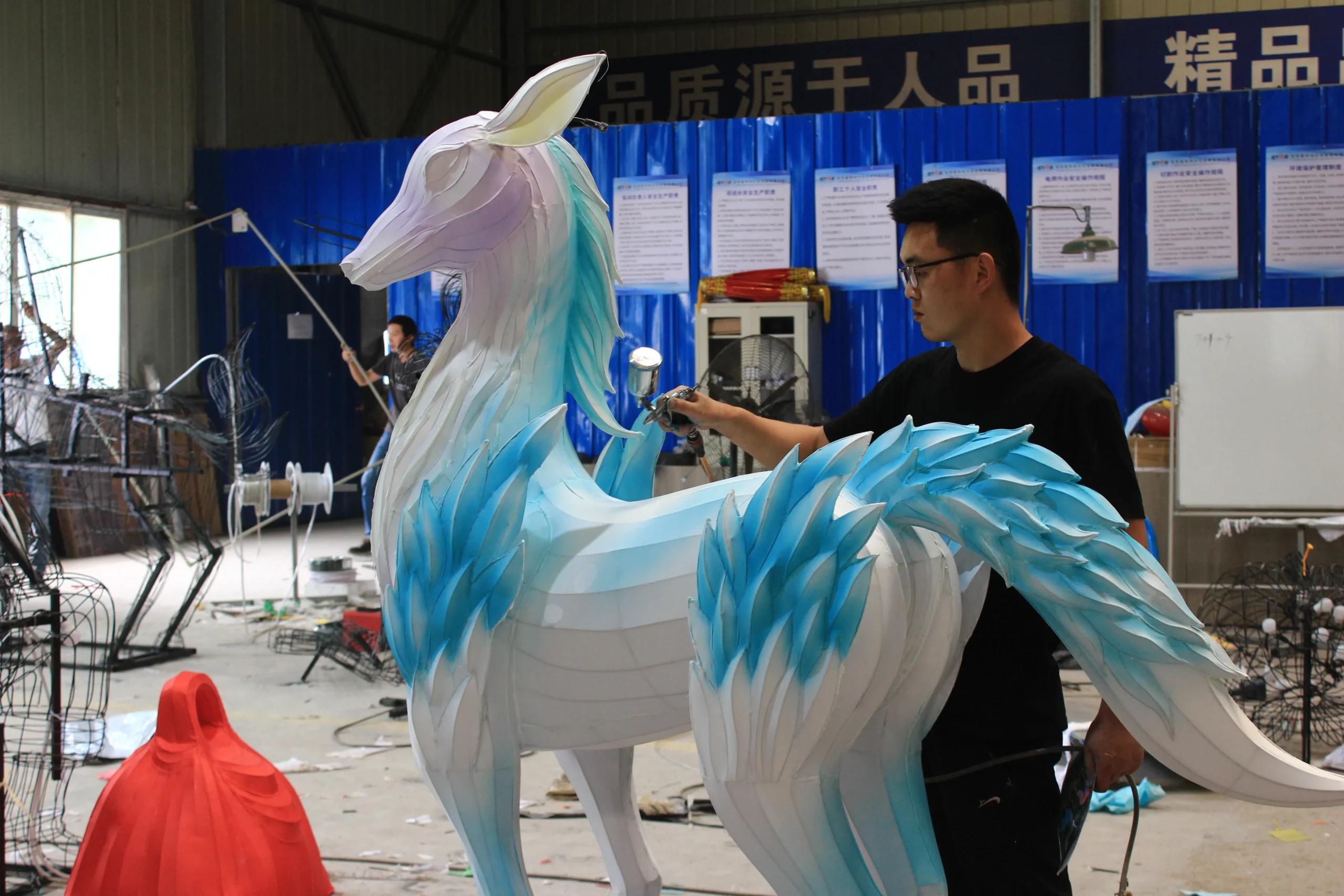
After the fabric has been fitted, the finishing artist develops the colour and painted detail. This is a distinct stage between covering the frame and presenting the completed figure. The white surface provides the form; spray work and painted accents give that form its final character.
The separate deer photograph shows blue shading following the raised details of the neck, shoulder and back while other areas remain pale. It shows how the artist works across an already covered surface. The colour treatment needs to respect the contours rather than obscure them. For a horse, the face, mane and transitions across the body are part of that same finishing discussion.
Spray shading and painted details should be reviewed together with the intended lighting. The daytime colours need to remain coherent when light passes through the fabric. The photograph documents spray application; it does not document every painting technique used on the horse.
Review the finished surface and illumination
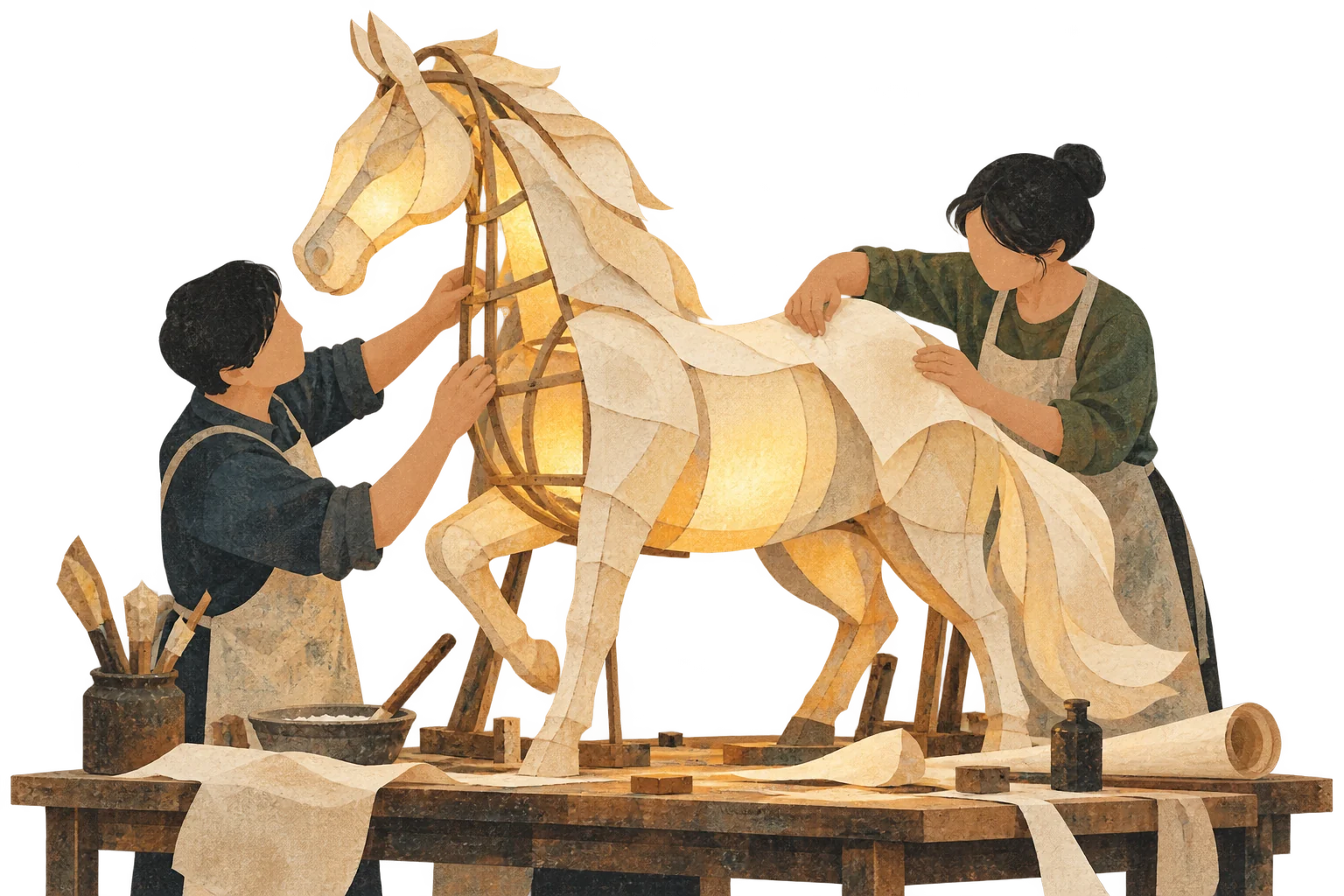
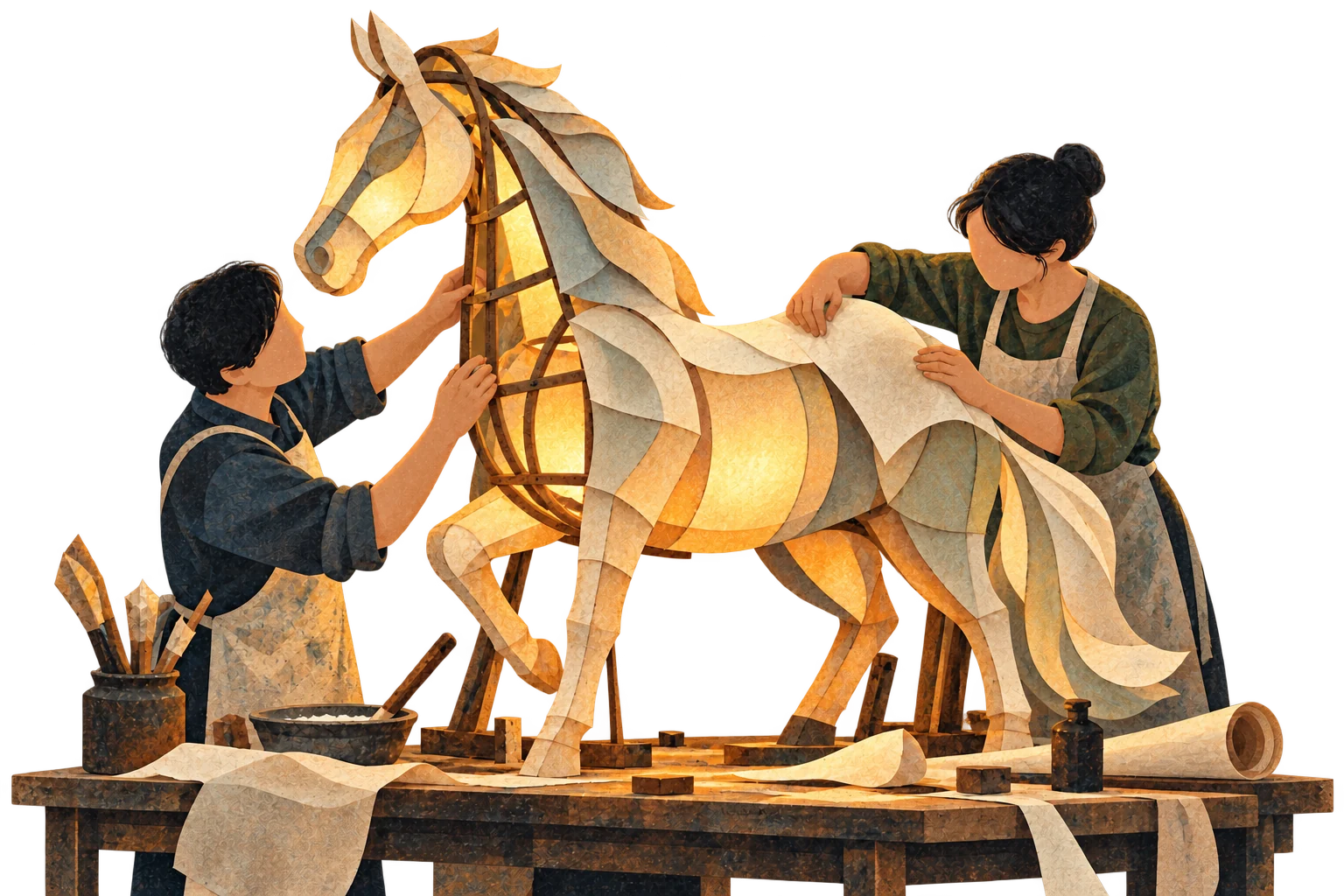
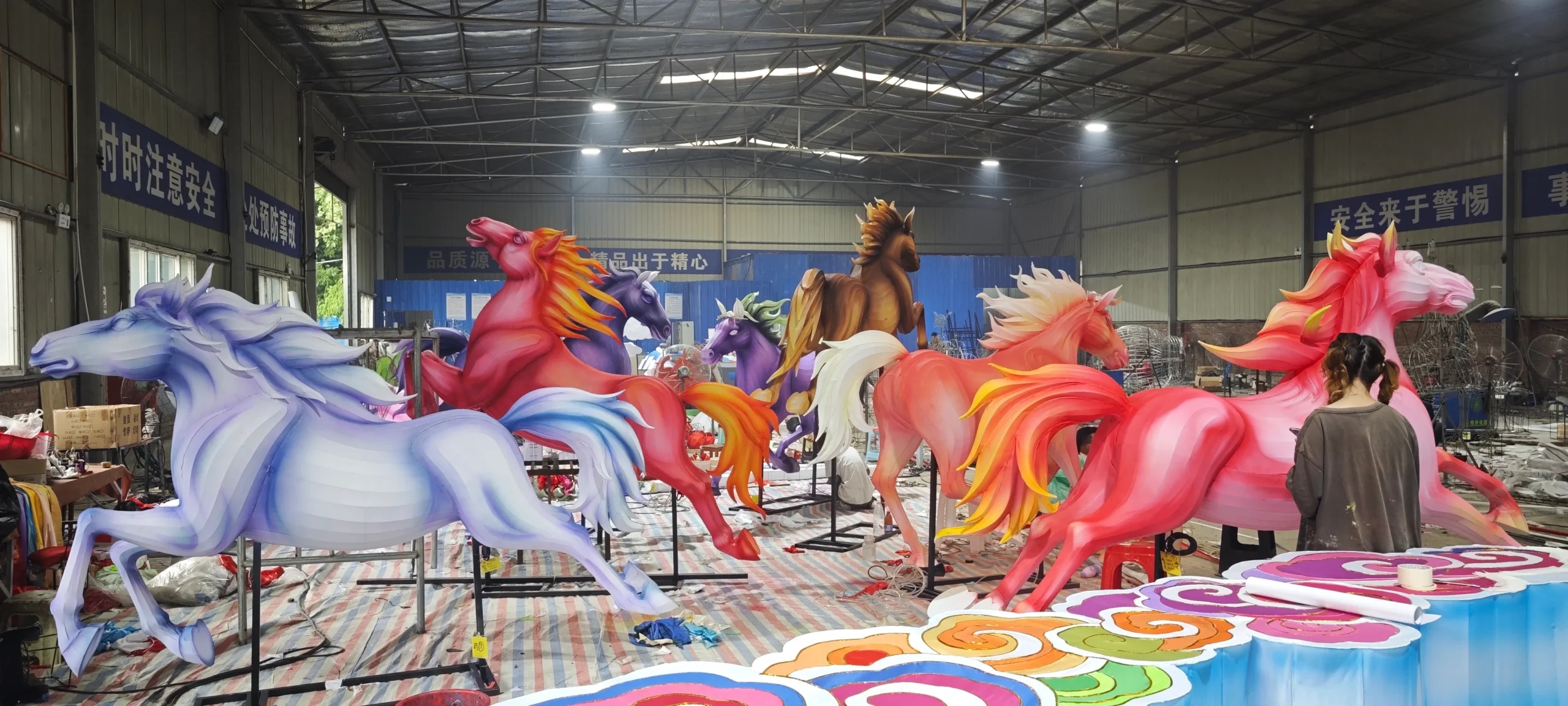
After finishing, the figure can be reviewed as a complete composition. The coloured horses show how the outline, surface and mane read together. The completed appearance is then considered alongside the illuminated effect, from the intended viewing positions.
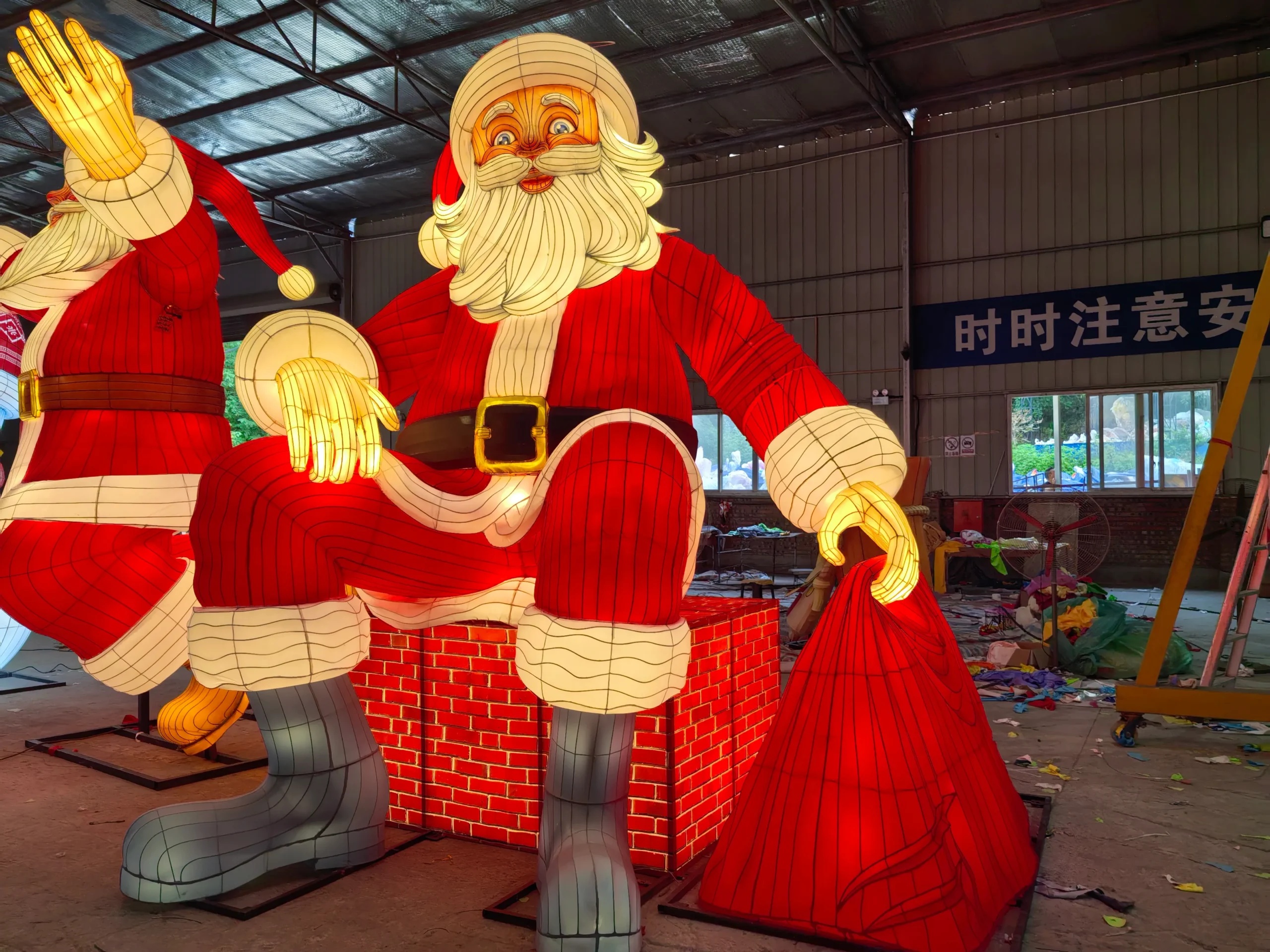
Lighting review considers distribution, colour and the visibility of details. Wiring and component access should remain practical before packing. The lighting, control and electrical checks need an agreed scope for each order; outdoor exposure and venue requirements must be addressed for the particular installation.
The illuminated Santa photograph is from a separate project. It demonstrates light beneath a fabric surface, but it is not a night-time photograph of the horse.
Carry workshop decisions to site
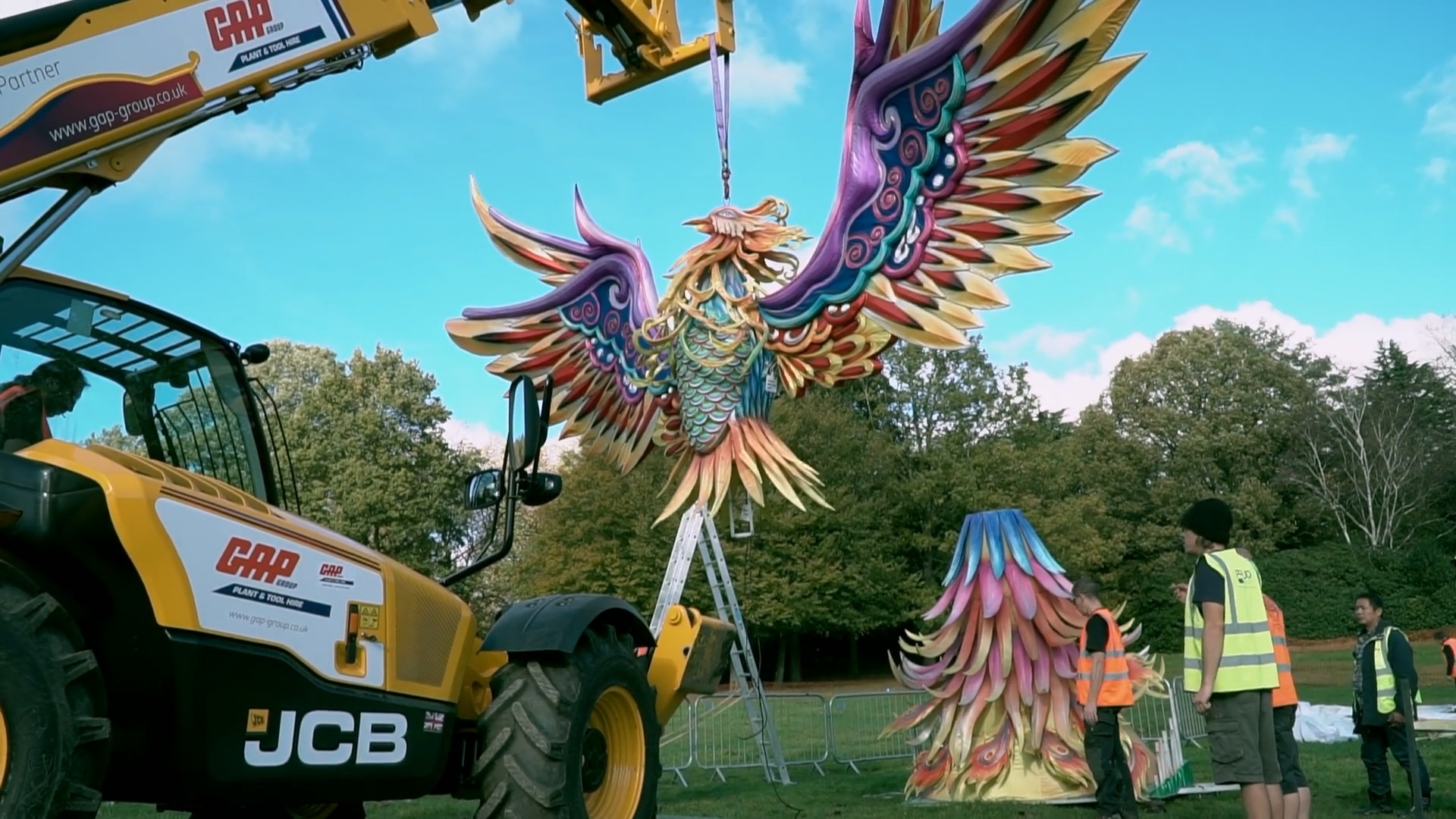
Assembly brings the finished sections into a different working environment. The phoenix photograph shows a large figure suspended from lifting equipment, with crew members and another section at ground level. This is a separate installation example, not a later stage of the horse shown earlier.
The receiving crew needs more than a finished photograph. Assembly order, joint details, cable references and handling information connect workshop knowledge to site work. Local labour, lifting equipment, power connections and the installation window must be coordinated. Remote guidance or on-site assistance should be agreed in advance so that responsibilities are clear.
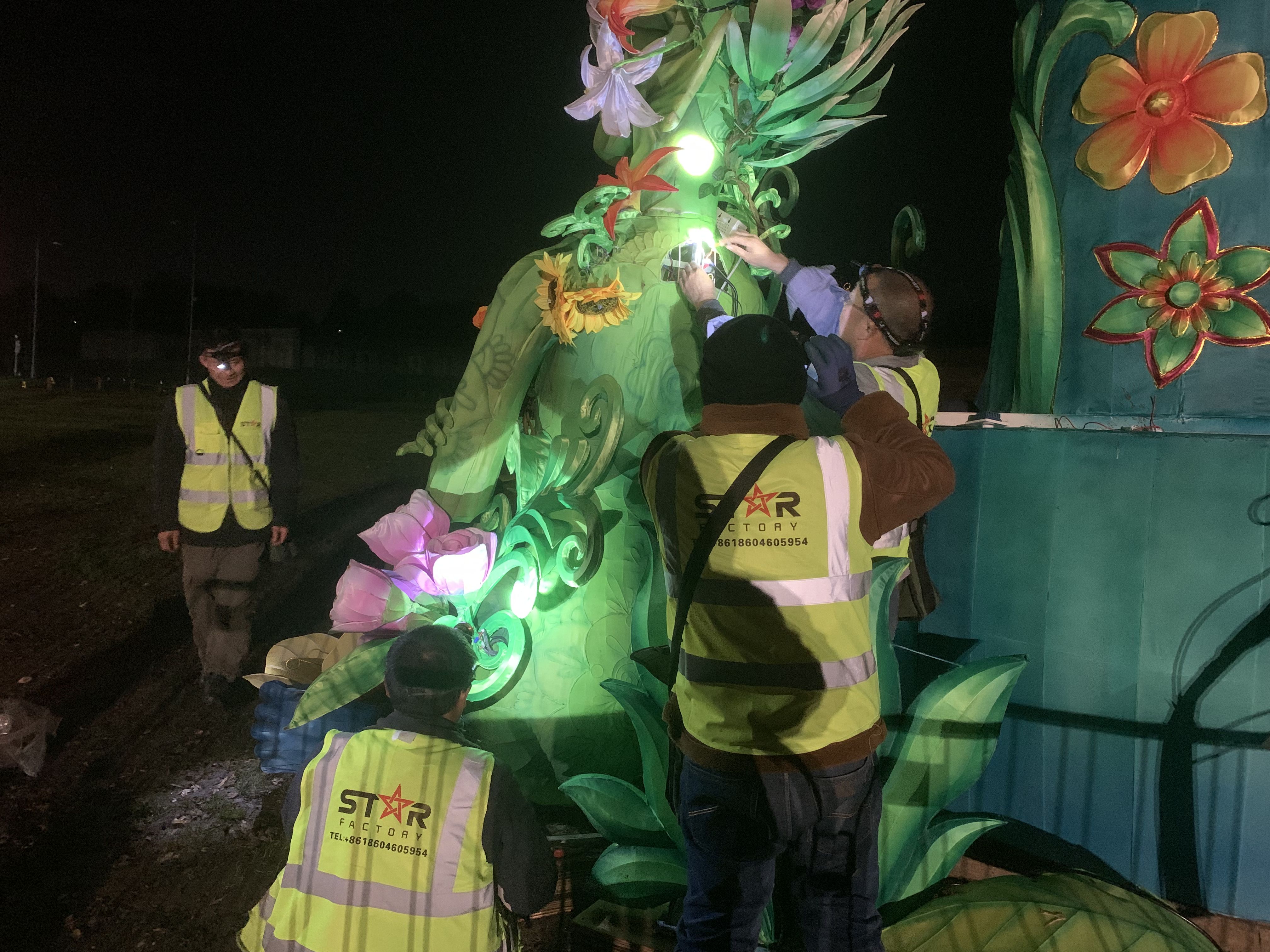
The floral night photograph is also a separate site example. It shows close-up assembly work on an illuminated display and should not be read as part of the horse project.
Become part of a public setting
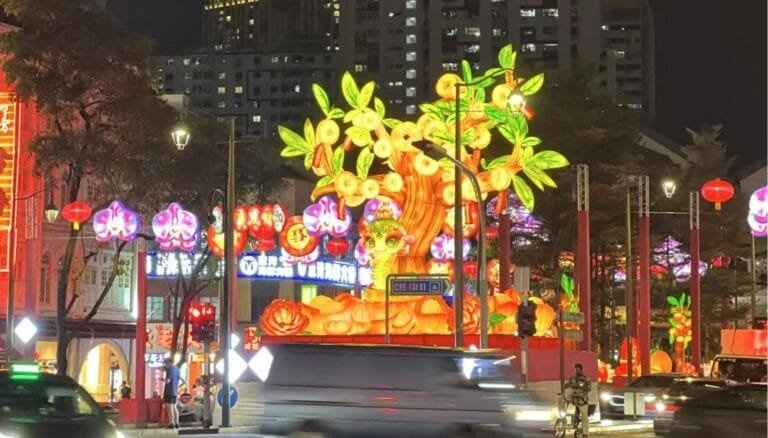
A public setting introduces a different scale of reading. The Chinatown Singapore snake display is a separate case, but it shows how a zodiac figure sits within an existing street rather than against an empty background. Its outline and colour must compete with surrounding lights while remaining part of the wider festival scene.
For us, the passage from frame to landmark depends on keeping these contexts connected. The viewing angle informs the pose; the structure supports the surface; lighting changes its appearance; packing and assembly carry the design to its destination. The finished figure is where those decisions become visible together.