The person in the room
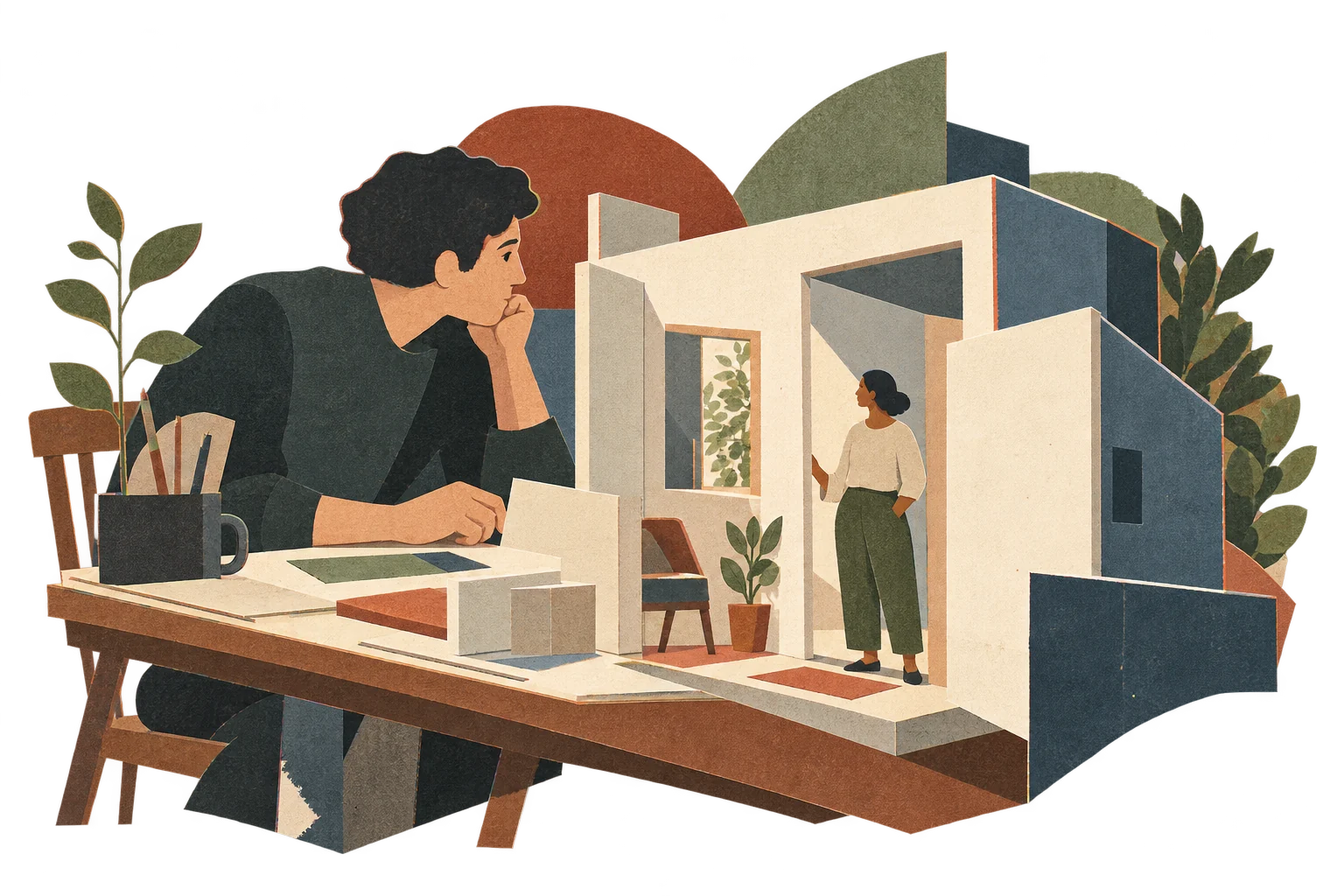
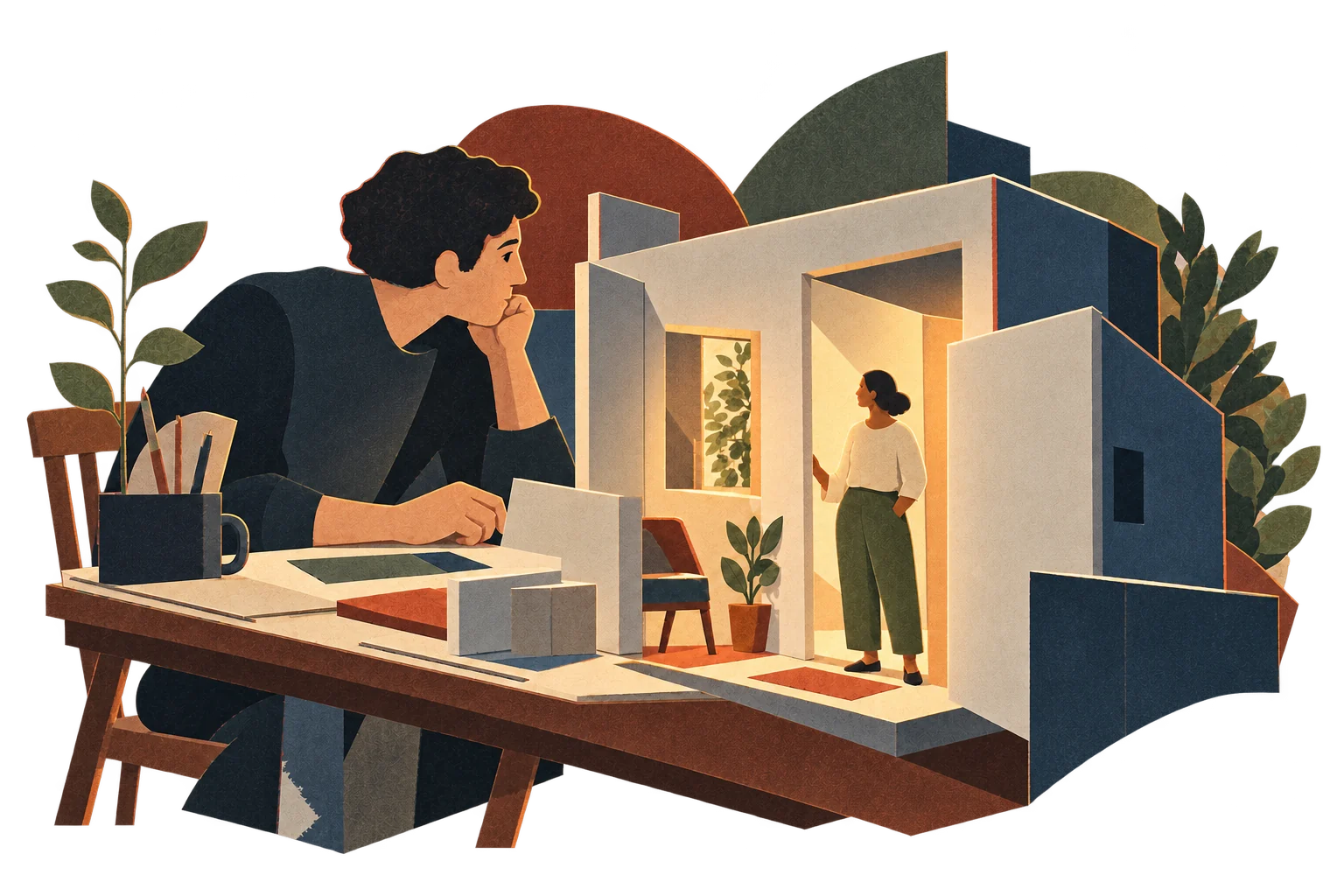
Once, in the middle of designing, a simple question came to me: who am I designing for? For the person sitting in front of me, talking about their home, their life and what they want? Or for the person I have constructed in my own mind?
On the surface, it was a simple question. I could think about needs, desires, lifestyle, economic conditions, climate, function and aesthetics. But for me, the question did not stop there. If I am designing for a human being who is going to live in this space, how well do I actually know them?
And then another question came to me: who am I, anyway? I did not want to find a philosophical answer. It simply became a question for me.
Perhaps because we have never really lived one another's lives. I cannot see the world exactly from where you stand, and you cannot experience the world exactly from where I stand. We see something in another person. We hear something. We understand something. And then we complete the rest of them in our own minds.
Perhaps this is why architecture is sometimes designed, before anything else, for the image of a person that the architect has constructed - not for the person who will actually experience the space. And perhaps the problem begins there.
I think about dreaming. In a dream, everything feels real. Only after waking do we say: it was a dream. Maybe this distance between knowing and experiencing, between what we know and what we actually live, is one of the important distances in being human.
I mean the 'I' that is afraid, that becomes happy, that remembers, that dreams, that enjoys one street and wants to escape from another. The same person who, when entering a house, does not see only walls, ceilings and windows. Perhaps the smell of a house takes them back to childhood. Perhaps the light in a room leads them to a distant memory. Perhaps a corridor means safety to one person and anxiety to another.
Somewhere among body, mind, memory and emotion, there is something that lives the experience from within. For now, I call that something 'I'. I still do not know exactly what this 'I' is. But this not knowing is not irrelevant to architecture.
Learning to see, learning to live
This question is not only about the projects I work on today. It takes me back to university. Sometimes I think that, in architectural education, we were given an image of architecture before we had a complete image of ourselves.
The classes came. The software came. The styles, the regulations, the renders. And gradually, architecture took shape for us. But somewhere in that process, I began to wonder whether we were learning architecture - or learning how architecture was supposed to look.
This distinction matters to me. Architecture is not only what we can represent. It is also what someone eventually lives. There is always a distance between what the mind constructs and what a human being actually experiences.
Who is designing?
For me, that tension is also present in the relationship between embodied experience and the architectural image: light, sound, smell and material on one side; representation, media and virtual space on the other. Now artificial intelligence has entered that conversation.
A machine can generate an image, suggest a form and participate in parts of a design process. But perhaps our deeper anxiety is not simply about artificial intelligence. If part of what has been a sign of my ability can now be done by a machine, then what exactly is 'me' in all of this?
The question that appeared for me in the act of designing has returned on a larger scale. Who am I designing for? And now I have to add another question: who is designing? The architect? The machine? Or a human being who still does not fully know themselves?
Sometimes I feel lost in architecture. But perhaps architecture is not the problem. Perhaps I am lost in the 'I'. I still do not know exactly who I am, and I am designing for someone whose identity I also do not fully know.
An architect is expected to understand human beings in order to create spaces for them. But the architect is also one of those human beings still trying to understand themselves. The more our tools are able to produce something for us, the more we may have to understand what is supposed to remain ours. Not only form. Not only image. Not only beauty. But experience, presence, memory, belonging - and the human being who actually lives all of these things.
In the end, I still do not know exactly what the 'I' is. I do not know who I am designing for when I still do not know exactly who 'I' am. But perhaps I do not need to know all of this before beginning. Perhaps this not knowing is itself a starting point.
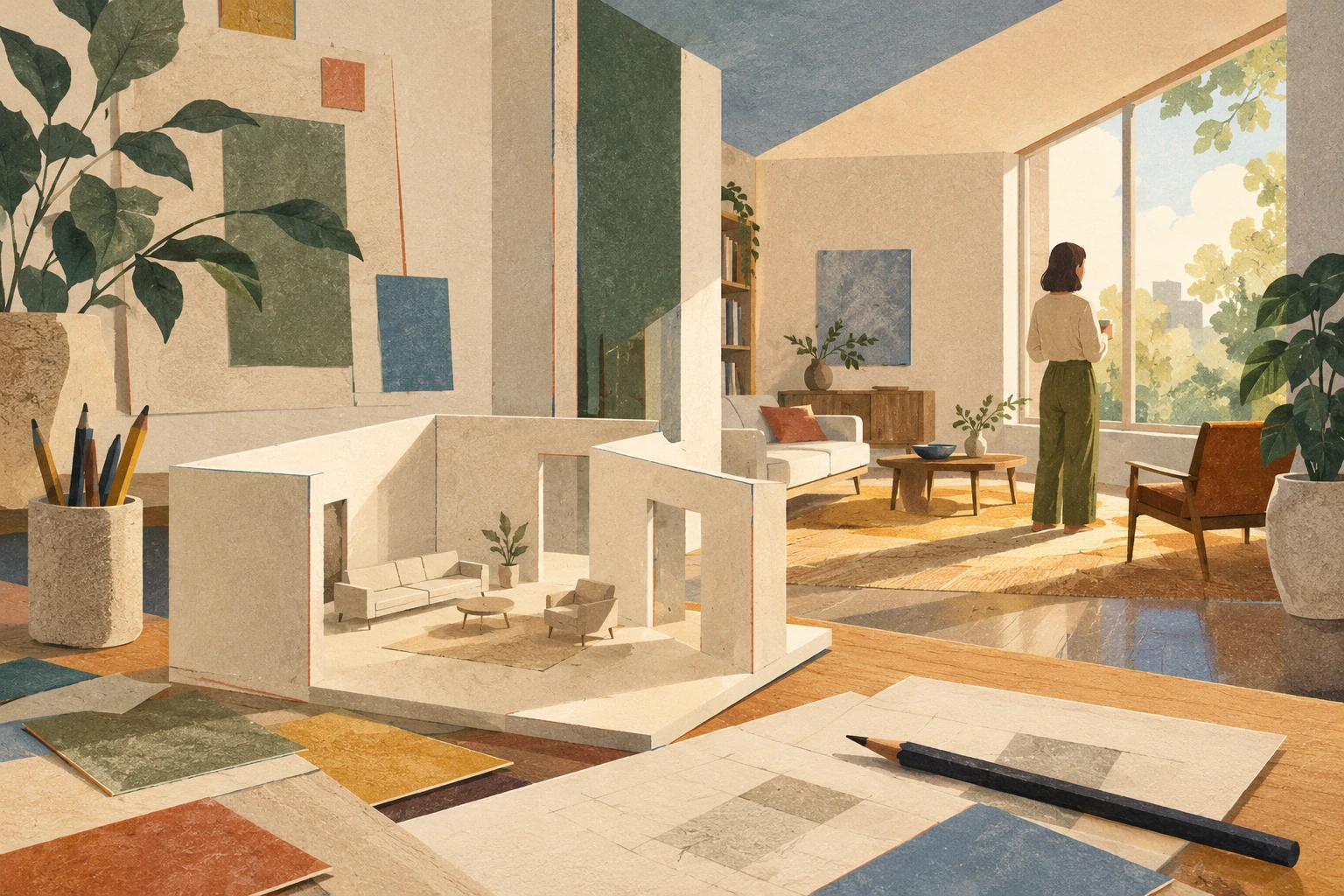
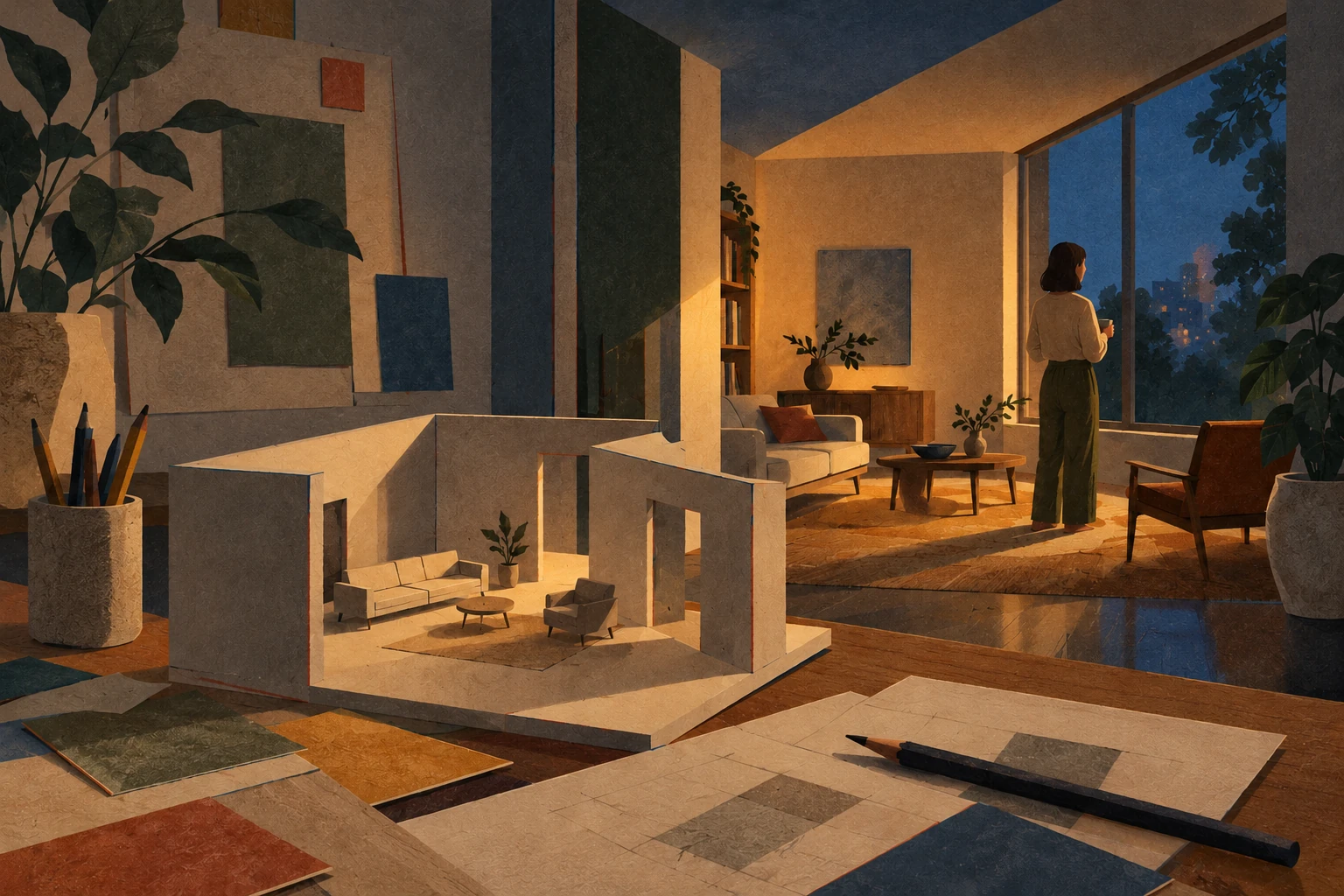
Perhaps we need to look at architecture again—not only from the outside, but from the place where a human being actually experiences it.
A place I cannot reach by sitting behind my desk.